In today’s digital world, how we watch TV has been revolutionised in recent years and IPTV (internet protocol television) is a big part of that. IPTV is a method of distributing television over the Internet that provides users with the ability to watch what they want, when they want. Whether you are a tech savvy person who loves to play with the latest entertainment options, or someone who prefers more efficient viewing, there is definitely something for everyone and that’s what this guide will tell you all about IPTV right from the get go!
We’ll give you the skills to navigate this exciting tech confidently — from what it is, to how it works; all the way through setup, and trending toward continued use in the future!
Understanding IPTV: Definition and Overview
What Does IPTV Stand For?
IPTV is short for Internet Protocol Television. Put simply, it’s a method for watching television via the internet instead of through conventional cable or satellite. So, yes, that’s right: You can currently put an end to those uncomfortable cable guy visits and start streaming your favorite shows to the max — couch, pjs, snacks and all!
Key Differences Between IPTV and Traditional Broadcasting
The primary distinction between IPTV and regular TV is in how the service is delivered. Satellite signals and coaxial cables or antennae as traditional TV does it, but via the trusty internet instead of hard wires. Analogy time: traditional broadcasting is analogous to eating out at a restaurant, IPTV is takeout – convenience and freedom of choice are the name of the game.
How IPTV Works: Technology Behind the Service
The Role of Internet Protocol in IPTV
At its very essence, IPTV is just internet protocol that’s used to deliver video and TV; it’s been around a bit longer than the internet itself (and unarguably more longstanding than can be remembered from cat videos). IPTV compresses the video and breaks it up into packets of data which travel over the internet, providing you with smooth viewing. It is like having a virtual waiter who understands exactly how to dish up your shows without making you wait forever.
Understanding the Infrastructure: Servers and Networks
Behind the scenes, IPTV runs on a series of servers that get the content you’d like to see on your living room television and deliver it to you in much the way your best friend serves up pizza – by visiting the store, picking it out, and bringing it back home. The servers are linked with high bandwidth internet network to make sure video streams reach you in the best quality.Video broadcasting is very good and powerful. In other words, when you click “Play,” you’ll see immediate results instead of getting stuck buffering… unless you have that ancient proliferation of tabs dragging down your browsing.
Types of IPTV Services: Live, On-Demand, and More
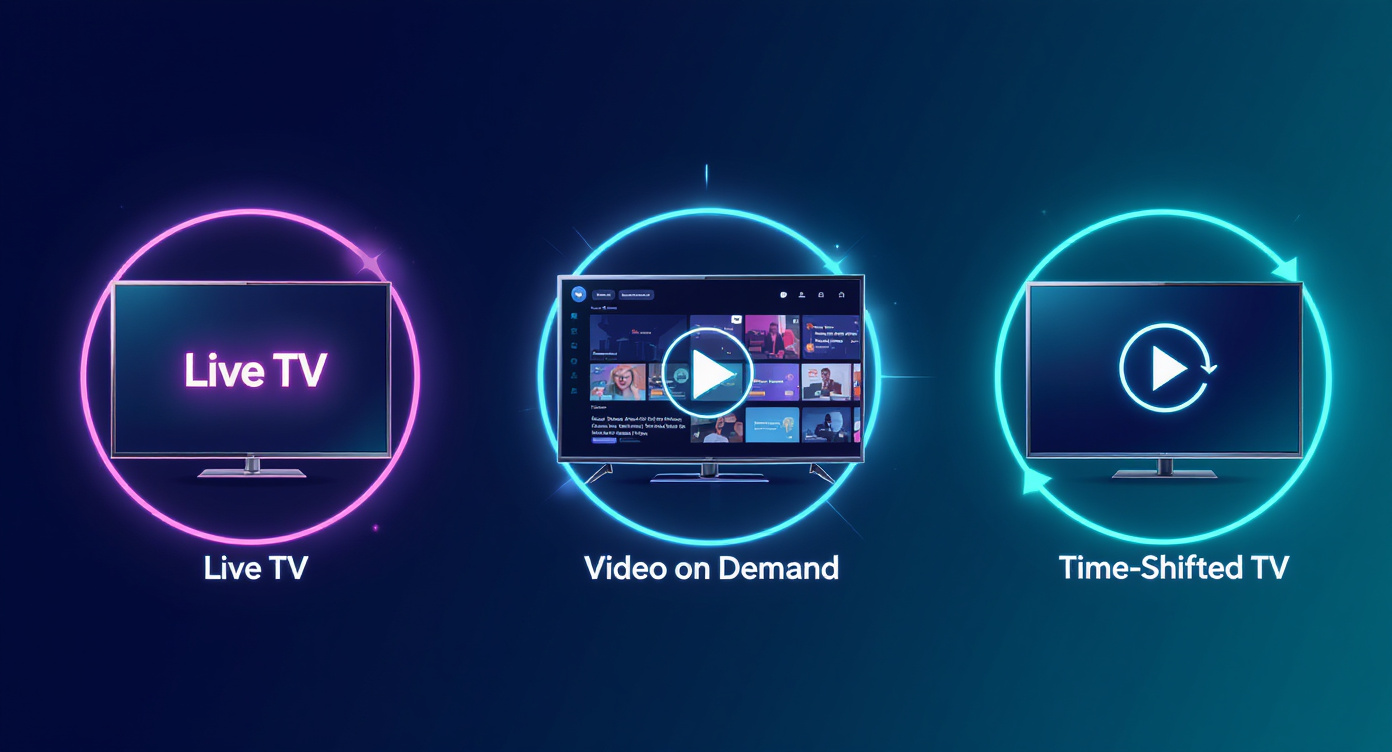
Live TV Streaming
Virtually, it is the live streaming of TV that is the lifeblood of IPTV. Allows you to view shows and events live, as you would with traditional TV, but also from the comfort of your couch or bed — even a bathroom break (we won’t judge). And that big game, or whatever juicy reality show plays on this screen, you can watch it as it happens.
Video on Demand (VOD)
Video on Demand (VOD) serves as a virtual library of video content. Have a new series to binge or an old film you’ve been meaning to watch? Just fill in your title and voila! You’re geared up for some movie-based glory, with no pesky popcorn smell to keep you from savoring the cinematic moment.
Time-Shifted Media
Time-shifted media is your best friend when life gets in the way of TV time. It allows you to watch programing when a show has already aired, so if you missed your favorite airing of your show, you can still do some catching up. It’s like a “rewind” button for life (if it were possible to literally press a button and see last week play out in front of you, but not quite so dramatic).
Benefits of Using IPTV: Why Choose This Technology?
Cost-Effectiveness Compared to Cable
There are many advantages of IPTV, with saving you money being one of the best. Get cheaper subscription rates at the same time you are able to access traditional cable plans with IPTV. And no more hidden fees, contracts that made you feel like you signed up for a long-term relationship instead of TV or hours on hold with the cable company.
Flexibility and Accessibility
With IPTV, you can have access to your preferred content wherever and whenever. Whether you are on the couch, at a cafe or procrastinating at work, if you have internet access, your shows are only a click away. It’s akin to lugging around a portable TV that you can fit in your pocket — minus the antenna and strange signals.
Content Variety and Customization Options
Avail of the World’s Content Selection – As with IPTV, the world is your oyster with regard to what you can watch. You’ve got an abundance of channels and genres to pick from, and with many services you can tailor while you watch. Whether you’re a binge-watcher of dramas, a devourer of documentaries, or cruisin’ for shows from abroad, your watchlist is a reflection of you and your unique taste. So long, letting the TV guide dictate what you’ll watch!
Setting Up IPTV: A Step-by-Step Guide for New Users
Choosing the Right IPTV Provider
First things first! You’ll need a provider that fits your viewing preferences the way you’d like your favorite sweatpants to fit. Seek out reliability, variety of channels and consumer feedback. A decent supplier will provide a user interface that’s easy to use and ideally, a free trial. Because who wants to subscribe to a service that feels about as alluring as a wet sandwich?
Required Equipment and Software
In order to access IPTV, you’ll first need one of those fancy Smart TVs that’s compatible with your streaming device (like a smartphone or streaming stick), high-speed internet (ten megabits per second and up is probably a good speed for binge watching) and an IPTV app or service. Some of the fan favorites are Kodi, VLC or dedicated apps your provider may provide.
Installation and Configuration Process
Once you’ve registered with your preferred provider, download the appropriate app for your device. Then open the app and input your subscription details – that’s right, this is where it gets magical! You may also have to enter the URL for your IPTV playlist (which your provider will supply you) to play content. Then, assuming you found what you were looking for, sit back and get ready for an evening of streaming bliss! If you do get overwhelmed, remember that it’s totally fine to take a deep breath and hit up Google!
Comparing IPTV with Traditional TV Services
Pros and Cons of IPTV
**Pros:**
- Flexibility: Watch whatever you want, as much as you want.
- More variety: Greater number of channels and more on-demand content.
- Affordable: Usually less expensive than a cable package.
**Cons:**
- Internet-reliant: Without internet, there is no TV — plain and simple.
- Potential buffer: If you have a hiccup in your connection, your show will, too.
- Legality issues: You want to make sure you are not on the wrong side of the law!
Market Trends and Consumer Preferences
IPTV is the cool wave that everyone wants to ride on this sunny day. (Messy cable contracts don’t do much better for us, either.)reichers0A growing number of consumers are seeking flexible viewing options which allow them to avoid those annoying cable contracts. The onset of the binge-watching phenomenon, and hunger for more original content than any other time in TV’s history, traditional TV is entering a cutthroat race with IPTV companies. Spoiler alert: It’s not over yet, the battle that is!
The Future of IPTV: Trends and Predictions
Technological Advancements on the Horizon
IPTV keeps pace with technology. Look for upgrades such as better video quality (hello, 8K), artificial intelligence to personalize recommendations and more seamless integration with smart home products. It’s a bright and bingeable future, people!
Impact of 5G on IPTV Services
And now you can kiss telophores goodbye, because 5G is about to blow the doors off even more. By providing faster speeds and lower latency, 5G can make streaming smoother and more robust. That’s hours of your life where you’re simply waiting for content to load.Allow me to take your dead time away and give you more time with the shows you love!
Shifting Consumer Habits and Industry Adaptations
IPTV providers are responding to consumer demand for more on-demand and mobile content. Look for more such collaborations between content creators and platforms as they continue to adapt to an audience that wants flexibility and choice.
Then reach for the popcorn, we are only at the beginning of an IPTV revolution! 1 Final note: IPTV stands to revolutionise the way we watch TV, and the above list of advantages make it a great alternative to traditional broadcasting.
Once you’ve got your head around what it is, how it works and the good and bad of IPTV then perhaps you’ll have a clear view on whether or not this service is the best option for your viewing needs. With ever developing technology you will gain a better quality of IPTV and be able to take advantage of the most exciting and advanced features IPTV has to offer.
Frequently Asked Questions
What do I need to use IPTV?
You will need a stable internet connection, an enabled device like smart TV or streaming boxes, and an IPTV subscription from any service provider.
How do I improve streaming quality of IPTV?
For a better streaming experience, make sure you have a strong and fast internet connection, wire your connection when available, and check if other users are sharing the same network as you during peak usage hours.
IPTV on multiple devices?
Most IPTV services enable viewing multiple devices but have a limits on simultaneous streams. And for specific information, check your provider’s policy.